Showing posts with label las vegas domestic violence attorney. Show all posts

Thursday, June 2, 2022

Four Factors that Constitute Child Abuse


Parents have the right and obligation to instill discipline in their children, especially when they are acting out of line. In many instances, this may involve a heart-to-heart talk detailing where the children are wrong and teaching them how to act right. For more old-fashioned families, however, parents may result to corporal punishment to get their message across.

Of course, an excess of anything can turn bad really quickly. In this case, going too far with the punishments may lead to the act qualifying as child abuse and can potentially leave the parent open to a criminal charge. For that to happen, however, at least four factors must be put into consideration.

Significant Harm

Corporal punishment often leads to some sort of injury, like light bruising after a spanking or pinching. However, if the disciplining act leads to even more serious wounds, it can qualify as an act of abuse. For example, lightly spanking a child for misbehavior may not inflict lasting effects; however, repeated hitting, or using other implements like a leather belt, can cause serious long-term injury. Certain physical methods automatically count as abuse, such as punching or kicking a child.

Stress

Excessively forceful child discipline not only affects them physically; it also hurts them mentally and emotionally. Prosecutors would definitely consider a case to be abuse-related if the child shows signs of post-traumatic stress, is increasingly withdrawn or antisocial, is increasingly aggressive, or is reported to be suffering repeated episodes of night terrors and bed-wetting after the alleged abuse. If the prosecution can find a direct link between the alleged abuse and the child’s current mental and emotional state, it can be more difficult for the parent to defend their case in court.

The Child’s Age

A victim’s age can be a significant factor in determining the severity of a person’s crime. In the case of child abuse, acting heavy-handed against someone who is basically a toddler constitutes a serious charge. In general, the younger the child, the heavier the alleged crime; this could be considered worse if the abuse has been happening for years.

Possible Sexual Assault

Corporal punishment involves physical contact. However, some disciplining acts may leave the child vulnerable to sexual exploitation. For example, instances of spanking might have episodes of inappropriate touching. If the prosecution finds evidence of such incidents, they can easily escalate the charge by adding charges for sex crimes.


Any one of these factors can be enough to put you up against a serious domestic violence or child abuse charge in Las Vegas. Thankfully, you can defend yourself with veteran help. Get in touch with reliable defense attorneys to help you deal with your case.

Thursday, November 19, 2020

A Look Into Alcoholism and Domestic Violence

 There are many factors that are related to or can instigate domestic violence in Las Vegas. It could be stress, genuine animosity, a rough upbringing, jealousy, or any random trigger that is exclusive to the people involved. Each domestic violence case has its own story to tell, and how the circumstances come about are fairly unique.

One of the oft-quoted factors that people consider with regards to domestic violence is that the abusive partner is a raging alcoholic. While it is true that alcohol has properties that can alter a person’s behavior once enough of it gets into a person’s system, does it really have an effect on how a person behaves towards their partner? Let’s take a look into the relation between alcoholism and domestic violence.

A Look at Numbers

In the first place, why do so many people cite alcohol as a factor in domestic violence cases? It’s because it’s been recorded in multiple cases worldwide. World Health Organization records indicate that 55% of domestic abuse cases reported worldwide involved alcohol at least one way or another, mostly involving alcohol consumption prior to an instance of abuse.

On the other side of the scale, the victims themselves would often turn to alcoholism themselves to deal with the pain. Based on recorded cases, domestic abuse victims were 15 times more likely to abuse alcohol themselves after a bout of violence. Note that the number is a global average; the numbers may be higher or lower depending on the country.

How They Are Related

As stated earlier, many people automatically relate excessive alcohol ingestion to personality changes and mood swings that can lead to domestic violence. Others state that the domestic abuse factors in only when the person is truly drunk. Once they sober up, they eventually stop being abusive and may even claim no memory of the abuse in the first place.

Sobriety advocates and medical experts refute this reasoning quite regularly. They point out that alcoholism alone does not act as a trigger for domestic abuse, but is instead only one of many instigating factors for the incident. Sobering up does not always deal with the underlying issue; in some cases, alcohol is only a red herring and other factors are in play, but people may have ignored them.

Is Alcohol Really Significant?

On one end, experts argue that alcoholism is only one factor in a long list of many that can lead to domestic violence. On the other hand, national records indicate that at least 2/3s of recorded domestic abuse cases across the country involved the perpetrator drinking alcohol immediately prior to the incident. With this situation, it is understandable that people are confused about how alcoholism factors into domestic violence cases.

In the end, whether or not alcoholism and domestic abuse are totally related is determined on a case-to-case basis. It may just be an overlap of two negative aspects, or it can just be pure coincidence. It all comes down to the personal experience of the involved parties, the environment they live in, and other issues that may escalate the situation or not.


Domestic violence is a complex and intimate crime, affected by various aspects that may be unique to a case, or similar across a variety of recorded incidents. Whether or not alcohol is related to such cases will be determined in court.


Friday, November 6, 2020

Why is Circumstantial Evidence Important in Domestic Violence Cases?

 For any case that goes to trial, evidence plays a vital and decisive role in deciding the outcome. Legal testimony does not hold any weight if there is no definite evidence to back it up. Even if it is as small as an eyelash in the wrong place, it can go a long way to proving a defendant’s innocence or guilt.

However, not all crimes have a multitude of direct evidence to work with, and so involved parties will have to rely on circumstantial evidence to prove their claims. Circumstantial evidence plays a bigger part in charges like domestic violence in Las Vegas, where first-hand witnesses or on-scene evidence is often lacking. If you are facing domestic violence charges in Las Vegas for the first time, you’ll need to know why circumstantial evidence is important in domestic violence cases.

First of All, What is Circumstantial Evidence?

Circumstantial evidence is any kind of evidence that is not directly related to the alleged crime, but implies that the alleged crime took place. It could be any objects gathered from the crime scene long after the act happened, or any piece of second-hand information gathered from people near its vicinity. In some cases, it just has to be official records related to the concerned parties that can count as circumstantial evidence, like hotel check-in records, travel records, credit card payments and the like.

To take a domestic violence situation as an example, circumstantial evidence may include items like testimony and records of the time the defendant and the victim are at home, testimony from bystanders who were not directly involved with the concerned parties, and testimony from responding officers. These pieces of evidence aren’t always directly obtained from the scene itself, but if their implication of an act of domestic abuse happening is proven true, they can do much in leading to a conviction.

Why Should You Be Concerned?

As stated earlier, evidence plays a vital role in any crime; moreso if the case in question does not have any other witnesses besides the victim and the defendant. As domestic violence cases are often very intimate crimes done in the privacy of a person’s home, it can be next to impossible to find witnesses willing or able to provide credible testimony that can implicate a defendant. As such, prosecutors will often turn to circumstantial evidence to secure a conviction.

While circumstantial evidence can be inaccurate at times, many convictions in the past have hinged on a combination of these pieces of evidence to confirm a defendant’s guilt, perhaps at a higher percentage than most people believe. The Nelson Serrano case is one example where circumstantial evidence relating to business partnership disputes and money laundering would be instrumental in convicting the defendant for the murder of his business partners. The questionable financial records, as well as second-hand testimony from the relatives of the victims, formed a strong case against the defendant and led to his conviction for multiple murders. Considering how decisive circumstantial evidence was in the proceedings of this case, you can imagine how difficult it can be for your domestic violence hearing if you can’t disprove circumstantial evidence placed against you in court.

Circumstantial Evidence and You

Defending against circumstantial evidence in a domestic violence proceeding can be tricky; as stated in the previous section, it is oftentimes an intimate crime, and if you fail to account for this kind of evidence, you can be convicted on the implication that they’ve established. The natural reaction would be to gain your own set of evidence and testimony to disprove the prosecution’s claims, but you can just be as handicapped as the other party when it comes to domestic abuse cases.

The first and most important thing you must remember is to always consult with your domestic violence defense attorney. Their experience with such cases means that they will know what kind of response you can formulate to deal with such kinds of evidence; remember that despite similarities in domestic abuse charges, all cases have their inherent differences that are unique to each defendant. Never leave anything to chance; circumstantial evidence still has a high probability of being related to your case, after all.


You must never underestimate how vital circumstantial is to a domestic violence case, but you should not be intimidated by it either. As long as you have the assistance of a veteran domestic violence attorney on your side, you can be assured of getting a dismissal or a not guilty verdict for your domestic abuse case.


Thursday, September 10, 2020

Review: Common Justifications for Committing Domestic Violence

 Domestic violence in Las Vegas is one of the more common charges in the city. It is not always reported in the media, but it consistently ranks among some of the most booked charges in town. Nevada criminal law in general has a strict penalty setup for domestic violence offenders, especially if they happen to be repeat offenders.

May criminals tend to justify their actions as a means of self-affirmation. Some convicted domestic violence offenders do the same, particularly repeat offenders or those who have enhanced charges. Let’s make a review at a few commonly invoked justifications for committing domestic violence.

Spur-of-the-Moment Emotions

Instances of domestic violence always involve strong emotions. It could be a variety of things: despair, confusion, denial, or disillusionment, on top of other things. However, one emotion that is always present is a strong sense of anger; such a strong emotion usually leads to some seriously dangerous actions when the domestic abuse incident happens. Many domestic violence defendants would claim that they did not commit any abuse, but was merely a sudden action caused by a sudden burst of anger and that they do not act like it regularly. Sudden anger is one of the most common defenses put up by domestic violence defendants to brush off charges, usually following it up with statements like ‘a stressful day’ or ‘pent-up frustrations’. Unfortunately for them, ‘anger issues’ can be used against them to prove that they are domestic abusers.

Traumatic Incidents

Most domestic abusers would blame a series of traumatic incidents in their youth to explain why they act as they do. They would cite particular incidents where they themselves were allegedly abused in similar circumstances, and blame their current disposition on these past events. While there are studies that connect PTSD to increased aggression and domestic violence tendencies, using it as an excuse just raises the question of why the defendant did not seek help before things escalated to an arrest and a court hearing. Instead of acting on their past trauma with the help of a professional, they choose to take it all out on their partner.

Injury-Related Personality Changes

Some domestic violence offenders insist that their partner abuse was the result of a traumatic brain injury that they have suffered in the past, either in their childhood years or later. They may be able to find witnesses who can confirm that they had a drastic personality change after said accident, like increased aggression and a shorter temper. However, suffering brain injuries due to accidents does not always explain coercive behavior towards a spouse; in some cases, the brain injury is merely fabricated and that people around them do not know that they have been manipulative and abusive even before the accident. Other cases may involve defendants with actual brain injury using it as an excuse, unaware that they were inherently abusive since the beginning.

Substance Abusers

Research confirms the strong link between domestic violence and substance abuse. While not all domestic violence offenders consume alcohol or drugs, many substance abusers also happen to be domestic abusers; higher substance use correlated to increased instances of domestic abuse and coercion of spouses in many cases. Unfortunately, many domestic violence offenders fall back on their previous drug abuse history to explain their behavior. This does not always explain the full picture of the situation, and in many cases the family abuse isn’t exactly related to substance abuse. Even after going through a rehab program, some offenders continue to act coercively towards their spouses.

Blame Shifting

One of the worst kinds of justifications used by domestic violence offenders is to blame their partner for their history of abusive behavior. They often say things like the partner getting in their face one too many times, excessive nagginess, or an outright direct callout to make the defendant mad in the first place. The excuse falls flat because getting angry is often a conscious thing, and blaming the partner for an action that is theirs alone incriminates them even more.


There is no merit in justifying acts of domestic violence, no matter what situation incited it. Remember these in the event that you are charged with a domestic violence complaint in Las Vegas.


Thursday, February 26, 2015

Power and Control in Domestic Violence

Attorney Ross Goodman
520 S 4th St,
Las Vegas, NV 89101
Phone: (702) 383 – 5088
Fax: (702) 385 – 5088


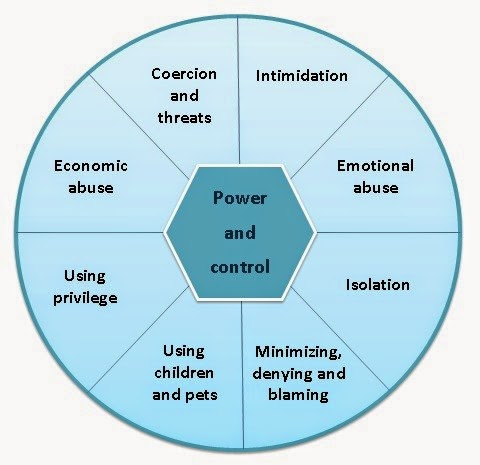
Power and Control Wheel

The power and control wheel was developed in 1982 by the Domestic Abuse Program in Minneapolis to explain the nature of abuse, to delineate the forms of abuse used to control another person, and to educate people with the goal of stopping violence. (source: Wikipedia)

Why does a person choose to abuse?
Basically, a person chooses to abuse someone for power and control.  By using different strategies, an abuser is able to gain and maintain control over a victim.

Here are some ways on how power and control is used in domestic violence:

Emotional Abuse
This is also known as psychological abuse or “chronic verbal aggression” by researchers. 

Common examples:
·         Improper name calling
·         Constant criticism
·         Belittling the victim’s abilities and competency
·         Jealousy
·         Accusations of imagined affairs
·         Insults
·         Withholding affection
·         Putdowns
·         Silent treatment
·         Threats to friends/family
·         Public humiliation
·         Manipulating the victim’s feelings and emotions to induce guilt
·         Blaming the victim for the abuse
·         Verbally abusing the victim
·         Threatening to “out” partners in the GLBT community
·         Subverting a partner’s relationship with the children
·         Repeatedly making and breaking promises.


Physical Abuse
This is defined as the use of physical force that may result in bodily injury, physical pain, or impairment.

Examples:
·         Hitting
·         Grabbing
·         Smacking
·         Pinching
·         Kicking
·         Shoving
·         Biting
·         Slapping
·         Burning
·         Arm-twisting
·         Pushing
·         Punching
·         Restraining from leaving a room/house
·         Hitting or threats with objects or weapon
·         Strangulation
·         Stabbing
·         Shooting. 

Sexual Abuse
This involves attempting to coerce any sexual contact without the consent of the victim.

Examples:
·         Marital rape
·         Acquaintance rape
·         Forced prostitution
·         Forced sex after physical beating
·         Criticizing sexual performance
·         Unwanted sexual acts
·         Forcing unprotected sex/pregnancy
·         Fondling
·         Sodomy
·         Sex outside the relationship – putting the victim at risk for disease.

Financial Abuse
This involves misuse of a person’s money, property or assets through theft or fraud.

Example
·         Having total control over the victim’s earned income
·         Having total control over victim’s public assistance or social security
·         Being forced to work
·         Having no access to money
·         Being given an allowance
·         Forbidding attendance at school
·         Forbidding employment
·         Not having any say in how the money is spent
·         Having to beg or ask for more money
·         Forced welfare fraud
·         Withholding information about family running up bills for which the victim is responsible for payment, having to do favors for money.


Are you accused of being responsible to any of these forms of abuse? Hire a domestic violence attorney right away! Atty. Ross C. Goodman is one of the most prominent and the most experienced Las Vegas domestic violence lawyers.  Call him at (702) 383-5088 or visit his office for a free legal consultation.


Monday, January 12, 2015

Order For Protection Against Domestic Violence


There are times when the physical abuse is grave that a protection order is already needed.

A protection order requires the offender to:

·         Stay away from the victim’s home, office, school, workplace, or any place designated by the court.
·         Follow the additional restrictions set by the court such as staying away from the victim’s children, maintaining a distance of 100ft from the victim, etc.

Requirements before granting a protection order

  • The person must be 18 years old or more. If not, a guardian who is 18 years old or more must apply for the minor’s protection order.
  •   The court may require the person and the offender to attend a hearing.
  • The person must be proven to be a victim of domestic violence.

Having a domestic violence lawyer is not mandatory for the application. However, an attorney can provide the victim with legal advises, can assist in the filing the protection order and can appear at court hearings.

How long does the protection order last?

  • A Temporary Protection Order expires after 30 days from the date of issuance. If the Protection Order is not served 30 days after the issuance, it would still expire.
  • An Extended Protection Order would expire exactly 1 year after the Judge signed the order.
Note: If the person wants to apply for an extended protection order, it cannot be granted once the temporary protection order has already expired. Consult with your domestic violence attorney for more details.

Penalties for Violating Court Protection Order
  • Any person who violates the Temporary Protection Order will be charged with Gross misdemeanor. It is punishable with a possible jail time of 1 year, plus fines of not more than $2,000.
  • Any person who violates the Extended Protection Order would be charged with a Category C Felony. It is punishable with imprisonment between 1 year to 5 years, plus fines of up to $10,000.


How do I counter petition a Protection Order charged against me?

There are 3 ways to counter a protection order.

  •  File a Motion to Dissolve the protection order

If the court granted the motion, it would immediately void the protection order charged against you.
  •  File a Motion to Modify the protection order

This motion would modify the rules set in the protection order. You may file this motion if you think the rules are too grave or burdensome. E.g. Maintaining a distance of 100 feet away from the victim, prohibiting the person to communicate with the children, etc.
  • Appeal for extended order for protection

The appeal can be filed after the extended order for protection has been issued.

Consult with an experienced criminal defense lawyer like Attorney Ross C. Goodman for legal advises regarding the Order for Protection. Attorney Ross C. Goodman has decades of experience in defending domestic violence cases.  Contact his office using the details below:

Attorney Ross Goodman
520 S 4th St,
Las Vegas, NV 89101
Phone: (702) 383 – 5088
Fax: (702) 385 – 5088